Catenaa, Tuesday, March 17, 2026- TD Cowen said the timeline for passing the CLARITY Act has shifted toward the August congressional recess, easing earlier expectations of an imminent breakthrough while warning delays could stretch into 2027.
The investment bank’s Washington Research Group indicated that negotiations on the crypto market structure bill remain active despite missing earlier informal targets. Managing Director Jaret Seiberg said there is no fixed urgency tied to the spring legislative calendar, as lawmakers continue discussions on unresolved provisions.
The legislation, which passed the House with bipartisan support in 2025, seeks to define regulatory authority over digital assets. However, progress in the Senate has slowed due to disagreements over stablecoin policies, banking concerns and political considerations.
Seiberg identified the July 23 House recess and August 8 Senate recess as the last practical window for advancing the bill before lawmakers shift focus to federal spending measures and defense policy.
Legislative activity typically slows in the months leading into election cycles, narrowing the opportunity for complex bipartisan agreements. Analysts said failure to act before the recess could push final consideration into a post-election session or beyond.
TD Cowen cautioned that if control of Congress shifts after the 2026 midterms, the bill could face further delays or require substantial revisions before passage.
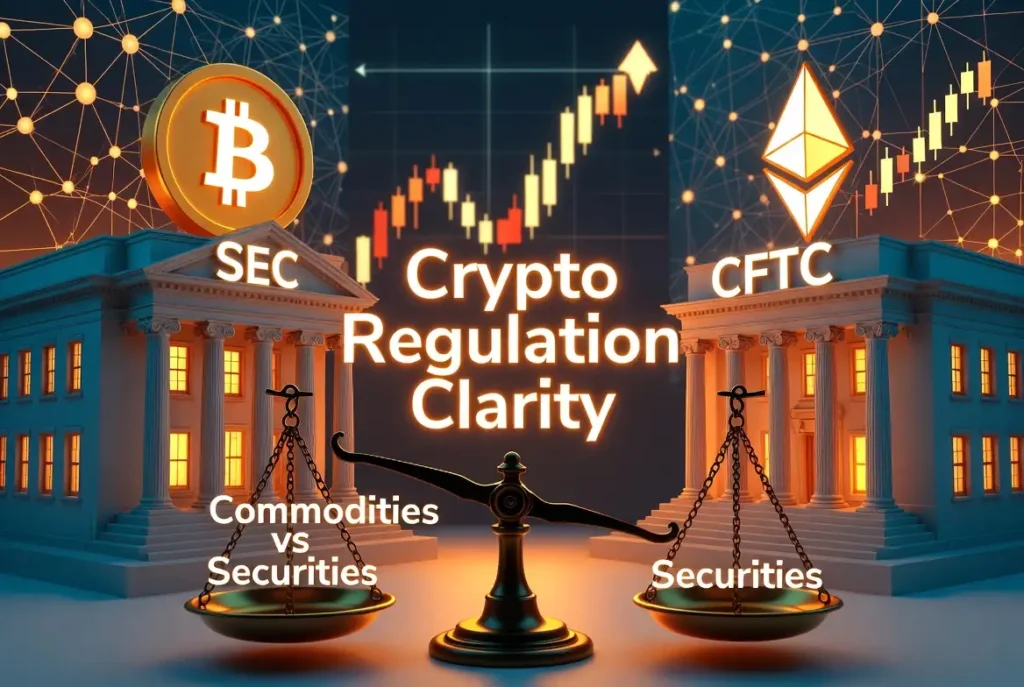
The CLARITY Act aims to divide oversight responsibilities between the Commodity Futures Trading Commission and the Securities and Exchange Commission.
Under the proposal, decentralized tokens such as Bitcoin and Ethereum would fall under CFTC jurisdiction for spot markets. The SEC would retain authority over initial coin offerings and centralized platforms.
The bill also outlines disclosure requirements, custody standards and anti-fraud protections intended to support institutional participation in digital asset markets. A provisional registration framework would allow firms to operate under temporary rules while regulators finalize guidance.
A major point of contention involves whether stablecoins should offer yield to holders. Banking groups have raised concerns that yield-bearing tokens could draw deposits away from traditional financial institutions.
Some lawmakers have proposed limits on such features, while others support allowing rewards tied to transactional activity but not passive holdings. Negotiations continue on how to balance financial stability with innovation.
The debate has also intersected with broader political issues, including proposed ethics provisions related to political figures’ involvement in crypto ventures.
The Senate Banking Committee has yet to complete markup of the legislation, with more than 100 amendments under consideration. Meanwhile, the Agriculture Committee has advanced portions related to commodities oversight.
Competing legislative priorities, including election-related measures and budget negotiations, have limited floor time for the bill. Analysts said this crowded agenda adds pressure to reach a compromise before the August recess.
Despite legislative delays, cryptocurrency markets have remained relatively stable. Analysts said recent regulatory guidance from federal agencies has reduced uncertainty, allowing market activity to continue without immediate legislative changes.
Institutional investment flows into digital assets have remained steady, supported by clearer rules on classification and oversight. Industry groups continue lobbying efforts, urging lawmakers to finalize a framework that supports growth while addressing risks.
The outcome of the CLARITY Act may influence the United States’ position in global digital asset regulation. Other jurisdictions, including the European Union and parts of Asia, have moved ahead with structured regulatory frameworks.
Analysts warn that prolonged delays could encourage companies to expand operations in regions with clearer rules. At the same time, lawmakers face pressure to ensure that any legislation balances innovation with financial safeguards.
TD Cowen said passage remains possible before the August recess if lawmakers resolve key disputes. However, the firm noted that the timeline remains uncertain, with political dynamics likely to shape the final outcome.
If delayed beyond this window, the bill could face a longer legislative path, potentially extending into the next Congress.