
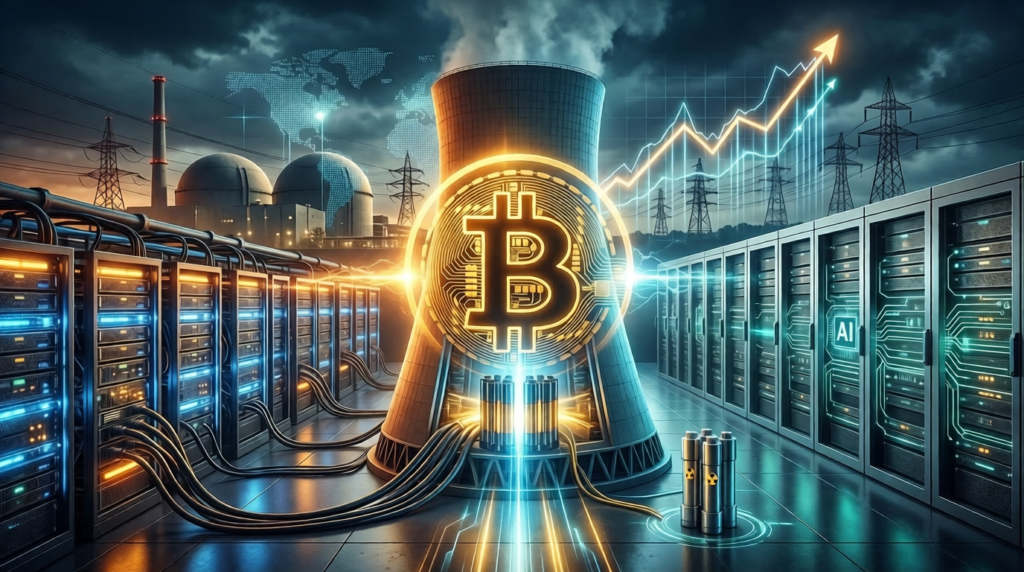
March 15, 2026 – Crypto operators secured nuclear deals years before Big Tech scrambled for clean baseload energy
Long before AI companies began scrambling for clean power, Bitcoin miners were quietly locking in nuclear energy partnerships. As a result, those early bets are now reshaping the global energy landscape.
According to the Cambridge Centre for Alternative Finance, 52.4% of Bitcoin mining’s electricity now comes from sustainable sources. Notably, nuclear power alone accounts for 9.8% of that mix. In contrast, that figure stood at just 4% back in 2021.
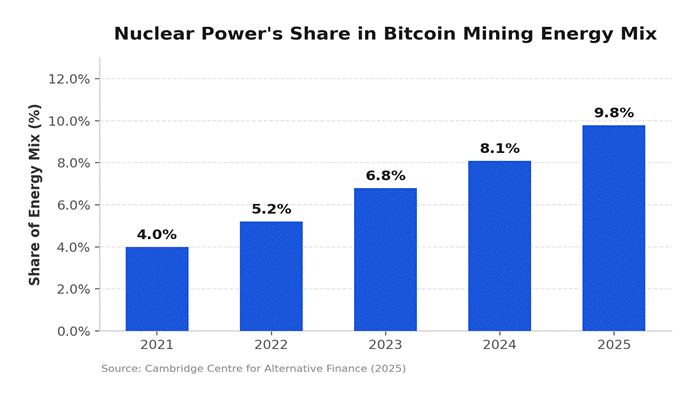
Figure 1: Nuclear power’s growing share in Bitcoin mining, 2021–2025
Early Movers in Nuclear Energy
TeraWulf was among the first to act. Back in 2021, the company formed a joint venture with Talen Energy near Pennsylvania’s 2.5 GW Susquehanna nuclear plant. Known as Nautilus Cryptomine, the facility drew electricity from the reactor at just $0.02 per kilowatt-hour.
Consequently, that rate ranked among the lowest in the public mining sector. It also gave TeraWulf a durable cost advantage over fossil-fuel-dependent rivals. Eventually, Talen acquired the full facility in October 2024 for $92 million.
Similarly, other miners pursued nuclear strategies of their own. For instance, Standard Power partnered with Energy Harbor to tap nuclear-generated electricity in Ohio. Together, these deals proved that atomic baseload power could reliably support high-density computing loads.
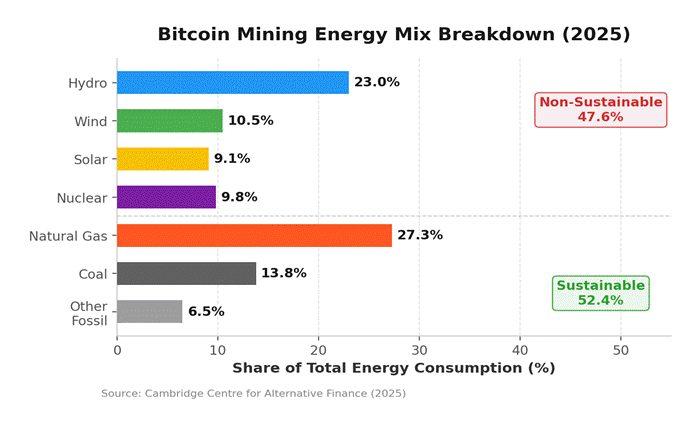
Figure 2: Bitcoin mining energy sources by type, showing the sustainable vs. non-sustainable split
AI’s Late Entry Into the Nuclear Race
Meanwhile, Big Tech is racing to replicate this model. Microsoft signed a 20-year agreement with Constellation Energy to restart Three Mile Island Unit 1. In addition, Meta announced deals with Vistra, TerraPower, and Oklo for up to 6.6 GW of capacity by 2035.
Furthermore, Google partnered with Kairos Power to deploy advanced reactors. Together, these contracts highlight a structural shift in energy procurement. Specifically, the Department of Energy estimates AI data center demand could reach 6.7% to 12% of total U.S. electricity by 2028.
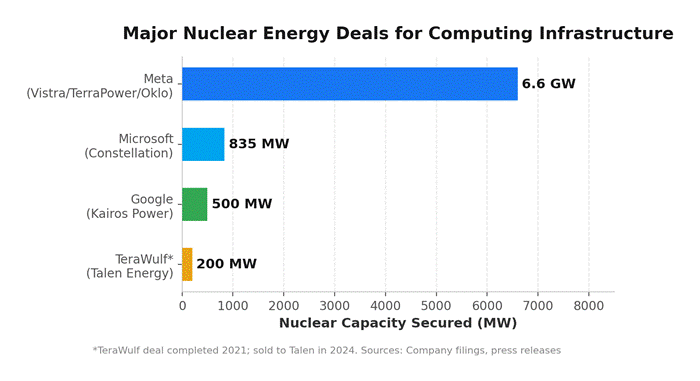
Figure 3: Scale of nuclear energy agreements across BTC mining and Big Tech
To meet this surge, Goldman Sachs Research forecasts that 85–90 GW of new nuclear capacity is needed by 2030. However, reactors take years to build and commission. Therefore, natural gas remains the faster and cheaper short-term alternative.
Structural Challenges Remain
Despite growing momentum, significant obstacles persist. For example, nuclear capital costs are five to ten times higher than those for natural gas, ranging from $6,400 to $12,700 per kilowatt. Additionally, regulatory timelines remain lengthy because the NRC is still modernizing its licensing framework for small modular reactors.
In response, the U.S. Department of Energy awarded $2.7 billion in January 2026 to strengthen domestic uranium enrichment. Moreover, Bloomberg Intelligence projects that U.S. nuclear capacity could grow 63% by 2050. Nevertheless, most of that expansion will likely occur after 2035.
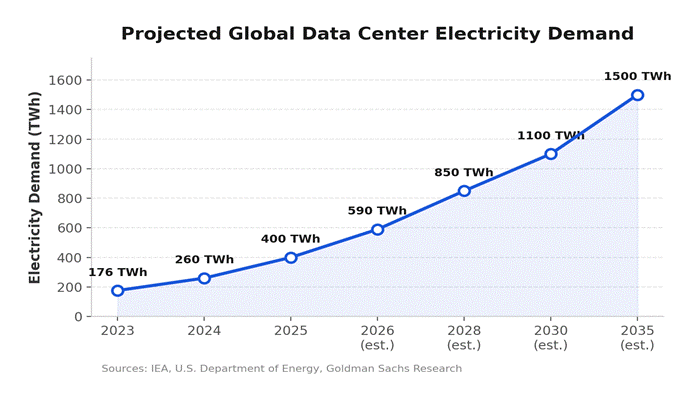
Figure 4: Projected global data center electricity demand, 2023–2035
The Bottom Line
Ultimately, Bitcoin miners demonstrated nuclear energy’s viability for power-intensive computing. Now, AI companies are scaling the same proven blueprint. Indeed, the International Energy Agency projects data center electricity demand could exceed 1,000 TWh by 2026, a figure equal to Japan’s total electricity consumption.
At present, nuclear energy provides 19% of U.S. electricity and over 50% of its carbon-free power. As a result, the miners’ early nuclear gamble looks increasingly prescient as demand accelerates.
Sources
• Cambridge Centre for Alternative Finance – Bitcoin Mining Electricity Consumption Data (2025)
• CoinDesk – “TeraWulf Starts Nuclear-Powered Bitcoin Mining at Nautilus Facility” (March 2023)
• The Block – “TeraWulf Sells $92M Stake in Nuclear-Powered Mine” (October 2024)
• Goldman Sachs Research – “Is Nuclear Energy the Answer to AI Data Centers?” (January 2025)
• International Energy Agency (IEA) – Data Centres and AI Electricity Demand Report
• International Atomic Energy Agency (IAEA) – Advanced Nuclear for Data Centres Brief
• U.S. Department of Energy – Data Center Electricity Use Projections (2028)
• Bloomberg Intelligence – U.S. Nuclear Capacity Growth Forecast (2050)
• Deloitte – “Nuclear Energy’s Role in Powering Data Center Growth” (December 2025)
• Tortoise Capital – “Nuclear Infrastructure Investing” (February 2026)