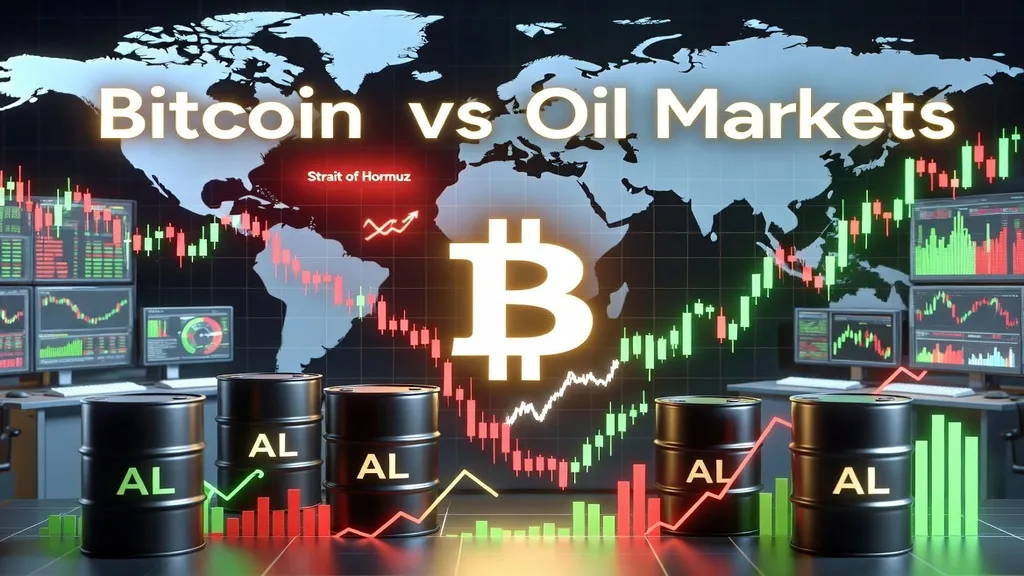
Catenaa, Wednesday, March 18, 2026- Bitcoin traded in a narrow range Monday as energy markets, led by surging oil prices, dominated investor focus following escalating tensions tied to Iran.
The digital asset hovered near $73,000 after modest intraday gains, continuing a months-long pattern of sideways movement between roughly $60,000 and $75,000. The price action comes as crude oil remains volatile, with global benchmarks holding near $100 per barrel after sharp increases linked to disruptions around the Strait of Hormuz.
Analysts say the shift in attention toward commodities reflects a broader rotation in markets, with traditional assets tied to physical supply constraints drawing stronger investor interest than digital currencies.
Oil prices have risen sharply since late February, with concerns that shipping disruptions could affect nearly one-fifth of global supply. The rally has lifted energy stocks and industrial commodities, including aluminum, while gold has shown limited upward movement amid a stronger US dollar.
Market strategists describe the trend as a shift toward tangible assets during periods of geopolitical stress. Rising yields and inflation concerns have further reduced the appeal of non-yielding assets, including cryptocurrencies.
Despite this environment, Bitcoin has avoided steep declines, holding above recent support levels even as broader risk sentiment fluctuates.
Since the escalation in tensions, Bitcoin has gained modestly, outperforming the S&P 500, which has posted slight losses, and gold, which has remained largely unchanged.
However, analysts note that the cryptocurrency remains well below its late 2025 peak, reflecting weaker momentum. Trading volumes have declined compared with previous highs, and market participation appears more cautious.
Some traders point to derivatives data showing negative funding rates, indicating that short sellers are paying to maintain positions. This setup can lead to short-term price spikes if bearish bets are unwound, though sustained rallies require stronger demand.
One factor helping stabilize prices is continued inflows into exchange-traded funds linked to Bitcoin. Institutional investors have maintained steady exposure, with recent weeks showing net inflows even as other asset classes experience volatility.
Corporate holdings of Bitcoin have also increased, with publicly listed firms continuing to add to reserves. Analysts say these long-term allocations create a floor under prices, reducing the likelihood of sharp declines.
At the same time, on-chain data indicates that many investors are holding rather than selling, with exchange balances declining and long-term ownership trends strengthening.
Economists warn that rising oil prices could have broader economic consequences. Higher energy costs are already feeding into inflation expectations, complicating policy decisions for the Federal Reserve.
Reduced expectations for interest rate cuts have weighed on risk assets. Higher borrowing costs and slower economic growth could limit appetite for speculative investments, including cryptocurrencies.
Several scenarios are shaping market expectations. A rapid easing of geopolitical tensions could lift Bitcoin toward recent highs, while prolonged disruptions in energy markets may push prices lower as investors shift toward safer assets.
Past geopolitical events have produced varied outcomes for Bitcoin. During earlier conflicts, the cryptocurrency initially declined before recovering strongly, reflecting its dual role as both a risk asset and a hedge against instability.
Market participants say the current cycle differs due to the growing role of institutional investors and regulated investment products. These factors have altered liquidity dynamics and reduced extreme volatility compared with earlier years.
Bitcoin’s current consolidation phase also follows a broader pattern seen after previous market peaks, where prices stabilize before establishing a new trend.
The structure of cryptocurrency markets continues to change as institutional participation increases. Spot trading volumes remain high, but derivatives activity plays a larger role in price discovery.
Analysts note that leverage levels are lower than during previous peaks, reducing the risk of large-scale liquidations. However, thinner liquidity can still amplify price swings during periods of stress.
Meanwhile, developments in global finance, including currency movements and commodity price shifts, are exerting stronger influence on digital assets than in earlier cycles.
Investors are closely watching oil markets and central bank policy for signals on the next direction. Continued volatility in energy prices is likely to remain the dominant factor shaping broader financial markets.
Bitcoin’s ability to hold its range suggests underlying resilience, but a clear breakout will likely depend on improved macroeconomic conditions and renewed investor confidence.
For now, the cryptocurrency remains in a holding pattern, reflecting uncertainty across global markets as geopolitical and economic pressures persist.