Catenaa, Friday, November 14, 2025- Researchers at Columbia University and the Max Planck Institute have identified a hidden mechanism in two-dimensional (2D) materials that traps light and electrons, offering a new tool to control quantum behavior.
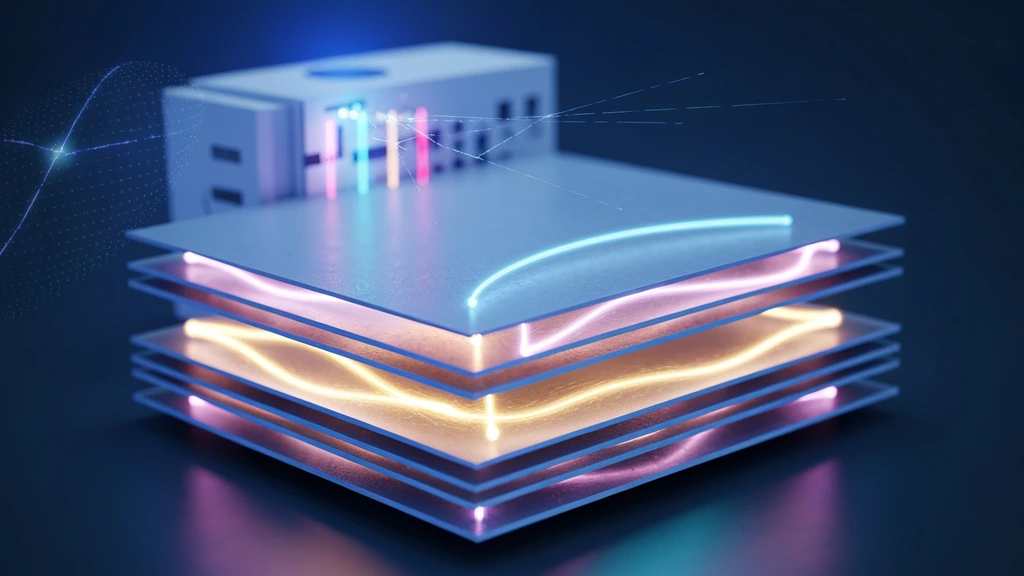
Using a chip-scale terahertz (THz) spectroscope, the team observed that small stacks of 2D materials, including graphene, can naturally form cavities that confine light and electrons.
These self-formed “quantum mirrors” create standing waves, allowing light–matter quasiparticles called plasmon polaritons to interact strongly within extremely small regions. The discovery appears in Nature Physics.
The experiments involved ultrafast laser pulses focused into cryostats, revealing unexpected standing waves in 2D layers only micrometers across.
The edges of the materials themselves acted as mirrors, reflecting streams of electrons and creating hybrid light–matter waves. Multiple layers can couple, producing interactions that resemble linked vibrations on guitar strings, drastically altering the behavior of confined plasmons.
Researchers developed an analytical model requiring only a few geometric parameters to match experimental observations. This model can now guide the design of 2D samples to manipulate specific quantum behaviors, including superconductivity, magnetism, and other exotic phases. By tracking resonances under varying carrier density, temperature, or magnetic field, scientists can probe the mechanisms driving quantum states.
The new chip-scale THz platform is expected to observe other quasiparticles across a variety of 2D materials, expanding possibilities for designing next-generation quantum devices. The team aims to explore how these naturally formed cavities can be harnessed to control light–matter interactions and uncover hidden quantum phenomena.