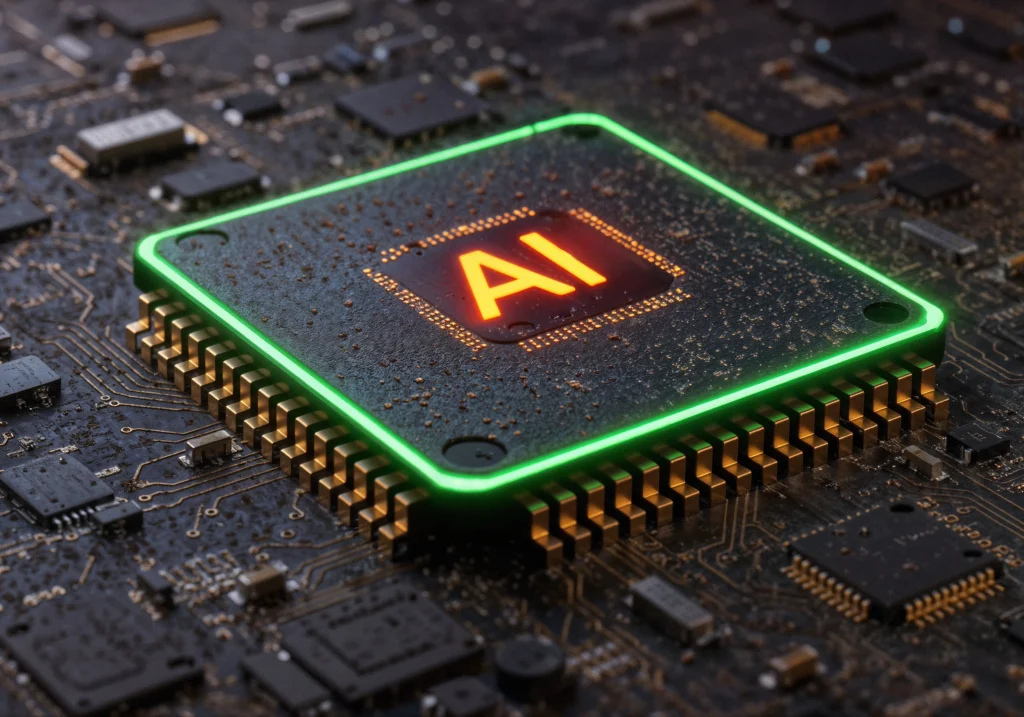
Catenaa, Sunday, March 22, 2026 – Elon Musk said his Terafab project, a plan to manufacture his own AI chips for robotics eventually, will be built in Austin and jointly run by Tesla and SpaceX.
Musk, the CEO of both companies, said he will start with an “advanced technology fab” in Austin that will have all the equipment necessary to make chips of any kind and test them.
Musk, who has no background in semiconductor production and a history of overpromising on goals and timelines, previously said the company would start with a smaller-scale fab before moving to a larger one.
Musk has said the semiconductor industry is moving too slowly to keep up with the chip supply he expects to need, even as output increases.
“That rate is much less than we’d like,” Musk said. “We either build the Terafab, or we don’t have the chips, and we need the chips, so we build the Terafab.” Musk’s project would require one day of supporting a terawatt of computing power per year, the amount he expects companies to eventually use as he ramps up his investments in AI and robotics.
Musk detailed specific plans, including producing chips that can support 100 to 200 gigawatts of computing power on Earth and chips that can support a terawatt in space, but gave no timelines for the facility or its output.
Musk has previously said that the facility would produce 2-nanometer chips. The project appears to be planned for an area near Tesla’s existing Austin headquarters and gigafactory, based on a photo shown during the presentation.
Many executives have expressed anxiety about a shortage of chips, particularly memory chips, during the race to build computing power for AI. But it’s rare to try building them.
Bringing semiconductor facilities online typically takes tens of billions of dollars and requires the purchase of complex machines from multiple providers. Factories can take years to become fully operational.
Tesla already has an agreement with the Samsung facility near Austin on upcoming chips. The EV company also has existing suppliers, including Taiwan Semiconductor Manufacturing Co. and Micron Technology, that Musk says cannot meet all the company’s needs as Tesla pivots its focus to robotics, autonomous driving, and AI.
The facility is expected to produce two types of chips, one optimized for edge and inference, primarily for his vehicle, robotaxi, and Optimus humanoid robots.
The other will be a high-power chip, designed for space use and suitable for SpaceX and xAI.
Musk said he expects xAI to use the vast majority of the chips.
The project serves as a foundational component of a more ambitious plan to move complex computing into orbit.
SpaceX has already petitioned the Federal Communications Commission for licenses to launch a massive network of data center satellites, with the capital for these ventures expected to be secured through a record-setting $50 billion IPO later this year.
The facility’s output will be essential for these “mini” AI satellites, which are projected to scale from 100 kilowatts to the megawatt range as the orbital network matures.
The announcement aligns with a broader consolidation of Musk’s technical assets, following SpaceX’s February acquisition of xAI.
By developing proprietary silicon, the group aims to lower the breakeven point for large-scale AI deployment while ensuring that the specialized needs of orbital data centers, which require radiation-hardened, high-performance capabilities, are met without relying on external roadmaps.