

March 22, 2026 – The prediction market platform saw an 11x jump in valuation in nine months, surpassing major public sportsbook operators amid intensifying regulatory scrutiny.
In Summary
Kalshi raised over $1 billion at a $22 billion valuation, led by Coatue Management.
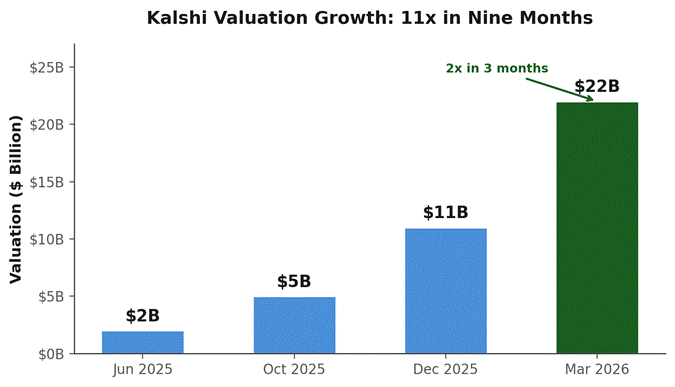
The deal doubles its December 2025 valuation of $11 billion in just three months.
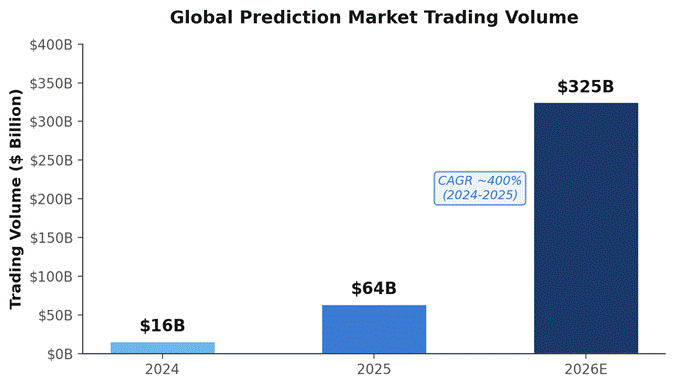
Prediction market trading volume surged 400% to $64 billion in 2025.
Arizona filed 20 criminal counts against Kalshi, alleging illegal gambling.
Annual industry revenue now exceeds $3 billion and may hit $10 billion by 2030.
Prediction market platform Kalshi has raised more than $1 billion in a new funding round. The Wall Street Journal first reported the deal on Thursday, March 19. Bloomberg later confirmed the $22 billion valuation and Coatue Management’s lead role in the financing.
The new figure marks a staggering 11x increase in just nine months. In June 2025, Kalshi was valued at $2 billion. By October, that number climbed to $5 billion. A December round pushed it to $11 billion. This latest deal doubles it again.
Notable backers from earlier rounds include Sequoia Capital, Andreessen Horowitz, ARK Invest, and Paradigm. Total known funding now exceeds $2.5 billion across at least eight rounds, according to CCN.
A Valuation Trajectory Without Parallel
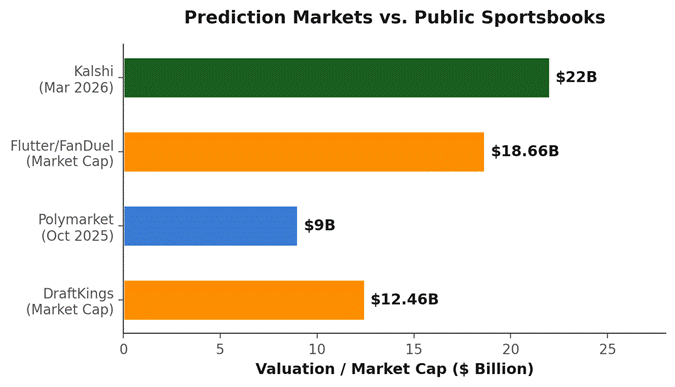
Kalshi’s valuation trajectory is one of the fastest in fintech history. The company has compounded value faster than most late-stage startups. At $22 billion, it now surpasses the market caps of Flutter Entertainment and DraftKings.
Source: WSJ, Bloomberg, Decrypt | Chart: Bloomberg Analysis
A person familiar with the matter told Bloomberg that Kalshi’s annualized revenue stands near $1.5 billion. The platform processes over $30 million in daily trading volume, according to The Defiant.
Industry Volume Surges Past $64 Billion
Kalshi’s fundraise reflects a broader structural shift in financial markets. Prediction market trading volume grew nearly fourfold in 2025. The sector processed roughly $64 billion in total volume last year, according to data from FalconX and Artemis. That figure was under $16 billion in 2024.
Source: FalconX, Artemis, Citizens Financial Group | Chart: Bloomberg Analysis
Monthly volumes surpassed $13 billion by December 2025. January 2026 alone reached $27 billion. Analysts at Citizens Financial Group project the sector could generate $10 billion in annual revenue by 2030. A Certuity report estimates the market may reach $95.5 billion by 2035.
Sports contracts now drive over 80% of trading activity. However, macroeconomic and policy-focused contracts are expanding quickly. Monthly active users grew from 4,000 in early 2024 to over 600,000 by late 2025.
The Kalshi-Polymarket Rivalry Intensifies
Kalshi’s closest rival, Polymarket, raised $2 billion from Intercontinental Exchange in October 2025. That deal valued it at $9 billion. Reports suggest Polymarket is now targeting a $20 billion valuation in new fundraising discussions.
Source: Company filings, WSJ, Fortune | Chart: Bloomberg Analysis
Together, Kalshi and Polymarket command more than 97% of prediction market share. In March 2026, Kalshi processed $6.9 billion in trading volume. Polymarket recorded $6.3 billion in the same period. The gap is narrowing.
Institutional players are deepening their engagement with both platforms. Susquehanna International Group and Jump Trading operate as market makers on Kalshi. Tradeweb Markets recently signed a data distribution deal with the company.
Regulatory Headwinds Mount on Multiple Fronts
The fundraiser arrives amid growing legal pressure. On March 19, Arizona filed 20 criminal counts against Kalshi. The state alleges the company operates an illegal gambling business without proper licensing. Kalshi has called the charges “seriously flawed.”
A day earlier, the Ninth Circuit denied Kalshi’s emergency stay request in a Nevada case. That ruling may allow further state-level restrictions. More than a dozen states have active legal actions against prediction market platforms.
The core debate centers on jurisdiction. Kalshi argues its contracts are federal derivatives regulated by the CFTC. State officials counter that sports-related contracts function as gambling products requiring state licenses.
CFTC Chairman Michael Selig recently announced plans to write new prediction market rules. He has signaled that the agency will defend its authority over event contracts, as reported by CoinDesk. The rulemaking aims to establish clear standards for market participants.
Several Wall Street firms are also taking precautionary steps. Point72 and Balyasny have reportedly banned employees from trading on prediction platforms. This reflects broader concerns about insider trading risks.
What Comes Next for Prediction Markets
Kalshi’s raise signals that institutional capital still favors the prediction market sector. The platform now competes directly with public sportsbook operators in scale. Its $22 billion valuation exceeds DraftKings and trails only Flutter among U.S. betting firms.
New entrants are flooding the space. Coinbase acquired prediction startup The Clearing Company in December. CME Group partnered with FanDuel to launch FanDuel Predicts. Crypto.com has also entered the market.
The outcome of ongoing legal battles will shape the sector’s future. Federal clarity from the CFTC could unlock further growth. But adverse state rulings could force platforms to restrict access in key markets.
Bottom line: Kalshi’s $22 billion valuation cements prediction markets as a mainstream financial category. Whether the industry can sustain this trajectory depends on how regulators, courts, and institutions respond in the months ahead.